
A place to get lost between the lines
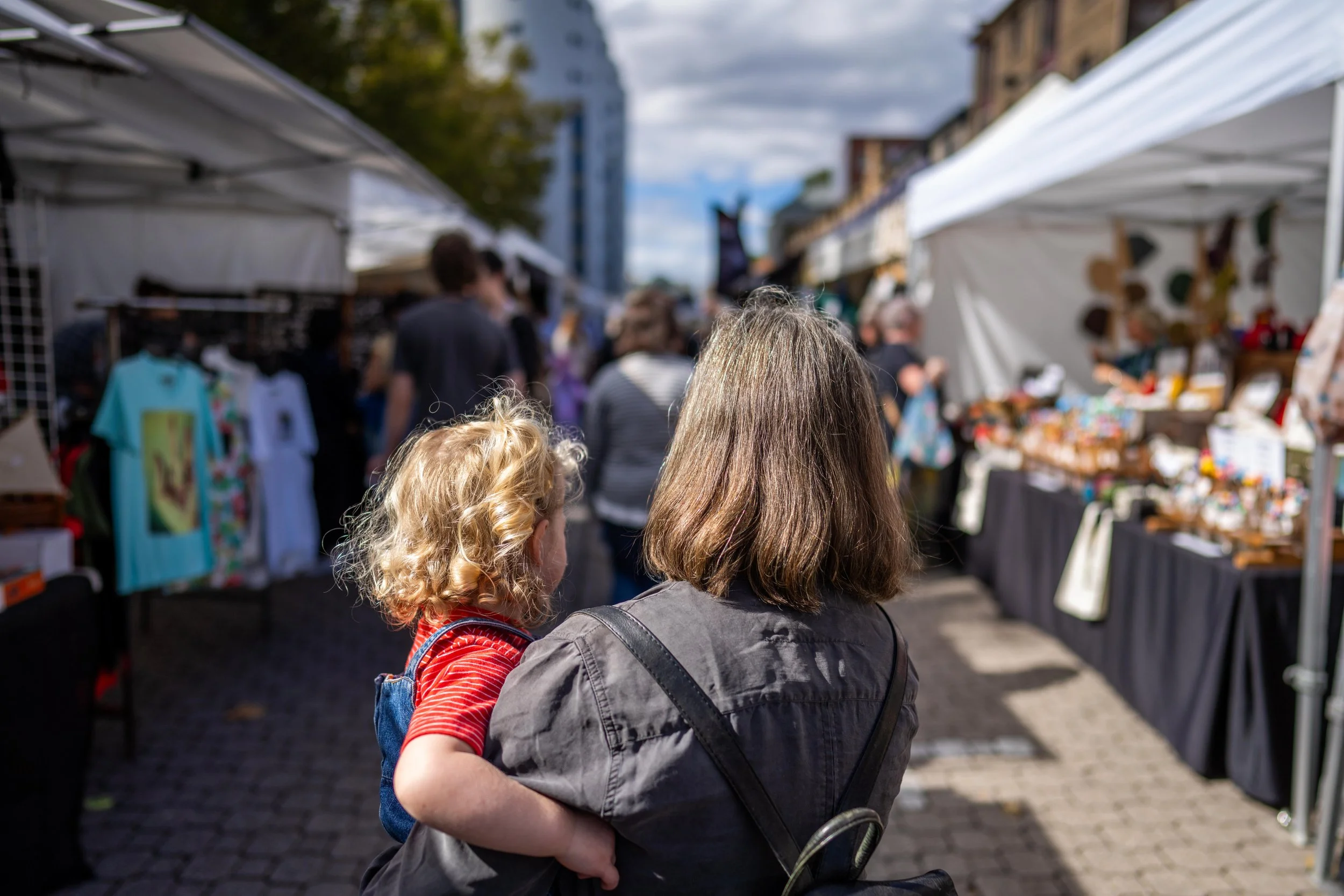
I wandered through Seaford on a bright market day,
With colourful stalls stretching out on display.
Fresh fruit piled high and sweet cakes to choose,
Handmade gifts, pictures and crafts to peruse.
There were breads and treats, local produce displayed with care,
Clothes, cards and creations laid out everywhere.
A friendly hello and a smile came my way,
I only wished I had longer to stay.
Beneath rows of gazebos the whole street felt bright,
With plenty to browse from the left to the right.
It felt warm and local, relaxed and sincere,
The kind of town market you’re glad to find here.
So, if you’re in Seaford when market day’s due,
Take a wander for yourself and discover what’s new.
Stroll through the stalls, have a browse on your way,
You never quite know what you’ll find on the day.
A Stroll Through Seaford Town Market
InspirationAt Iris Brooker, buying local is about much more than where something is purchased. It is about people, relationships, creativity and keeping a sense of community alive.
As a small independent Sussex business ourselves, we understand the time, care and determination that goes into creating something of your own. Whether it is a book, a handmade gift, a loaf of bread, a piece of artwork or locally grown produce, behind every product there is often a person with an idea, a story and a great deal of hard work.
That is why we are proud to raise the flag for buying local.
A visit to Seaford Town Market was a reminder of exactly what that means. Rows of colourful stalls, carefully presented goods, friendly conversations and a genuine sense of pride in what people had made or brought to sell. It was not simply a place to shop; it was a place to meet people, discover something different and feel connected to the town around you.
For Iris Brooker, that spirit matters.
We believe local businesses help give towns their character. They bring individuality, warmth and personality in a way that cannot always be replicated elsewhere. When we support them, we are also supporting local jobs, local creativity and the confidence for small businesses to keep going, growing and trying something new.
There is something very special about knowing that the person standing behind a stall may also be the person who made, designed, baked, grew or created what you are looking at. A simple purchase can therefore mean far more than a transaction. It can be encouragement. It can be recognition. It can be somebody choosing to believe in another small business.
That is a feeling we understand at Iris Brooker.
We are building our own business here in Sussex, telling our own stories and creating books that we hope families will enjoy together. Along the way, we want to celebrate the other independent businesses, makers, traders and creatives, including our favourite local artists, Sussex Art Prints, who are doing exactly the same thing in their own way.
So when we say buy local, we really mean:
Browse local. Talk local. Discover local. Support local.
Because sometimes the smallest purchase can make the biggest difference to the person on the other side of the table.
And perhaps that is the real inspiration behind the poem: taking a little time to wander, say hello, discover what is on our doorstep—and wishing we had just a little longer to stay.
We belong to somebody else’s cat
The front door stood a little ajar,
She couldn’t have wandered terribly far.
No bell was rung, no card was shown,
She simply walked in as though she owned the home.
She paused in the hallway, looked left and right,
Conducting an inspection with obvious delight.
The kitchen came first, as kitchens often do,
For cats have priorities — and food is number two.
Number one, of course, is finding a chair,
Or somebody’s lap that happens to be there.
But first came the cupboards, the floor and the bin,
Just checking, perhaps, for a snack tucked within.
Nothing was offered. Not chicken. Not ham.
Not even a saucer of something from a can.
She looked quite appalled at this terrible lack,
Then checked all the cupboards in case we’d held back.
She wore a neat collar, a tag on display,
So clearly, she had somewhere else she should stay.
Her eyes were bright, her coat smooth and sleek,
She’d clearly been eating quite well all week.
A scratch underneath her chin did the trick,
She leaned into fingers remarkably quick.
Then round went her cheek on the cupboard and door,
Her tail held high as she marks out the floor.
The table leg next, then the side of a chair,
A rub on the doorway, a rub everywhere.
“No animals live here. Well, isn’t that neat.
I’ll claim all the furniture, hallway and seat.”
She edged towards the sofa and gave it her stare,
As though checking the springs and the quality there.
One leap and she landed, without any fuss,
Then settled herself between the cushions and us.
A stroke down her back from her neck to her tail,
Produced such a purr, it could rattle the mail.
She stretched like a queen on a velvet-lined throne,
Quite clearly forgetting the house wasn’t her own.
Then over she rolled with her paws in the air,
A pose that suggested, “Now rub under there.”
We foolishly thought this was part of the plan.
She looked at the hand. Then looked at me, the man.
One rub. Two rubs. Three — perhaps four.
Then suddenly: “Right. I’ve had enough. No more.”
A twitch of the whiskers, a flick of the tail,
The sort of clear warning no human can fail.
She jumped from the sofa and walked to the door,
Without even glancing at us anymore.
No thanks for the service, no goodbye or chat,
Just off down the path went somebody’s cat.
But the very next day, with the door open wide,
We spotted two green eyes appearing outside.
A pause. Then a paw. Then a confident pat.
Apparently, we now belong to somebody’s cat.
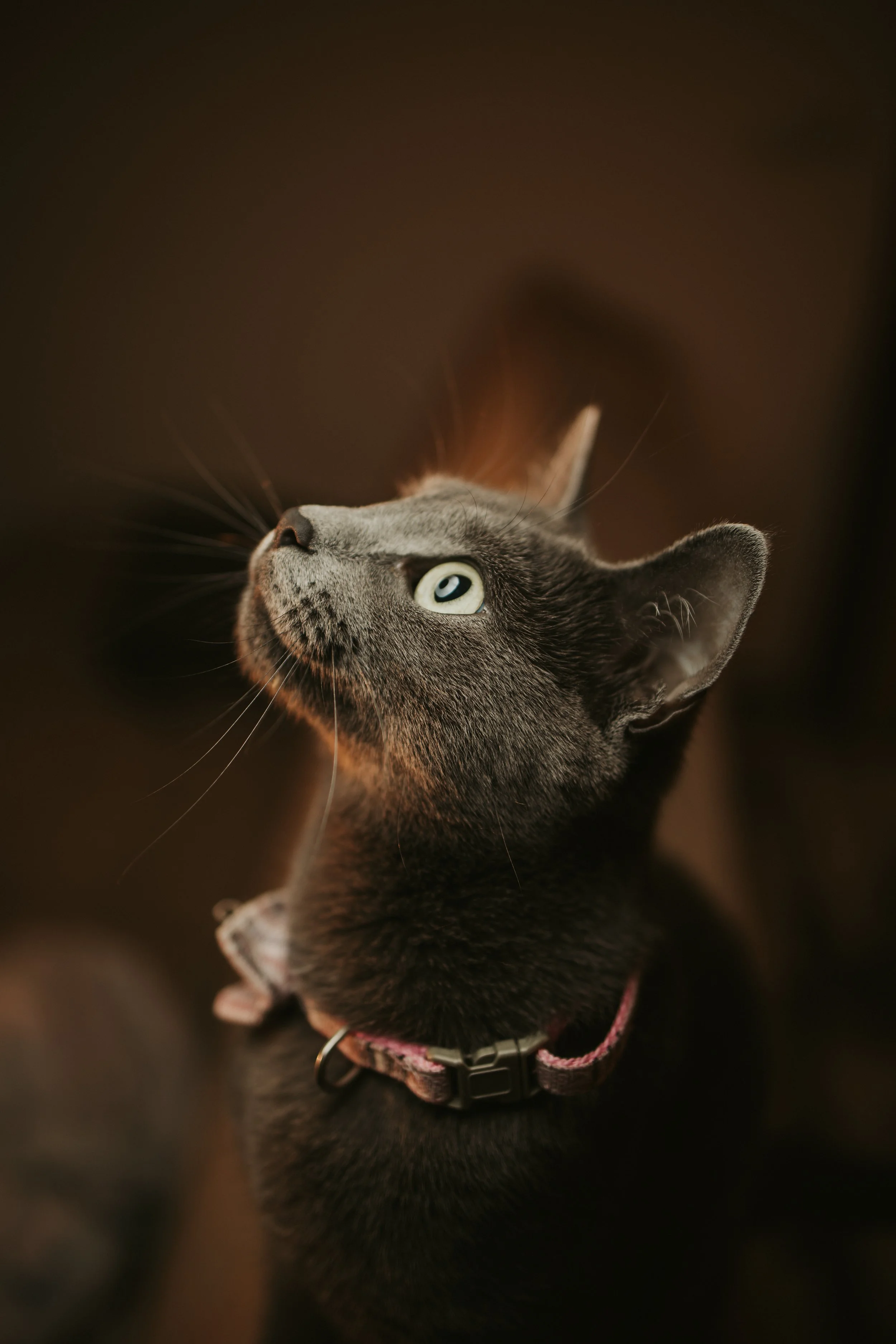
Do you ever get the feeling that a cat has chosen your house as one of its regular stopping-off points? Not your cat, you understand. Somebody else’s cat.
It appears at the door, strolls in without an invitation, has a good look around, checks the kitchen in case anything interesting has appeared, inspects the furniture, accepts a little fuss and then settles down as though it has been paying the mortgage for years.
And just when you think, “Well, I suppose you live here now,” it gets up, walks out and disappears. Until the next time.
That is exactly what inspired We Belong to Somebody Else’s Cat.
Our visitor is clearly loved and well looked after. She has a collar and tag, looks extremely healthy and is certainly not going hungry, so no food is offered here. What she does get is a scratch under the chin, a stroke along the back and, if she is in the mood, a temporary claim on the sofa. She arrives when she feels like it, leaves when she feels like it and gives every impression that the arrangement is entirely on her terms which, when you think about it, is probably the most cat-like arrangement possible.
So, this poem is for anyone who has ever opened the door to find that somebody else’s cat has decided to pop in, inspect the premises and remind you that, for a few minutes at least, your home belongs to her.
InspirationThe Inspiration Behind “We Belong to Somebody Else’s Cat”
This poem was inspired by an unexpected little visitor who began wandering into our home whenever the front door was left open on a warm afternoon.
More than twenty years ago, we lost our own cat, Cleo, and there is something very special about this new visitor because she looks remarkably like her. She belongs to somebody else, wears a collar and tag, and is clearly well cared for, so there is never any need to offer her food.
Instead, she simply appears.
She wanders in, inspects the kitchen, rubs against the cupboards and furniture, accepts a scratch under the chin or a gentle stroke along her back, sometimes settles herself on the sofa, and then, just as suddenly as she arrived, she decides she has had enough and leaves.
There is no routine and no invitation. She comes entirely on her own terms — which, of course, is exactly how a cat would have it.
Then another day arrives, the door is open, and there she is again.
After so many years without Cleo, it is rather lovely to have a cat briefly wander back into our lives, even if she belongs to someone else.
Or perhaps, as the poem suggests, we have got it the wrong way round. Maybe we now belong to somebody else’s cat.
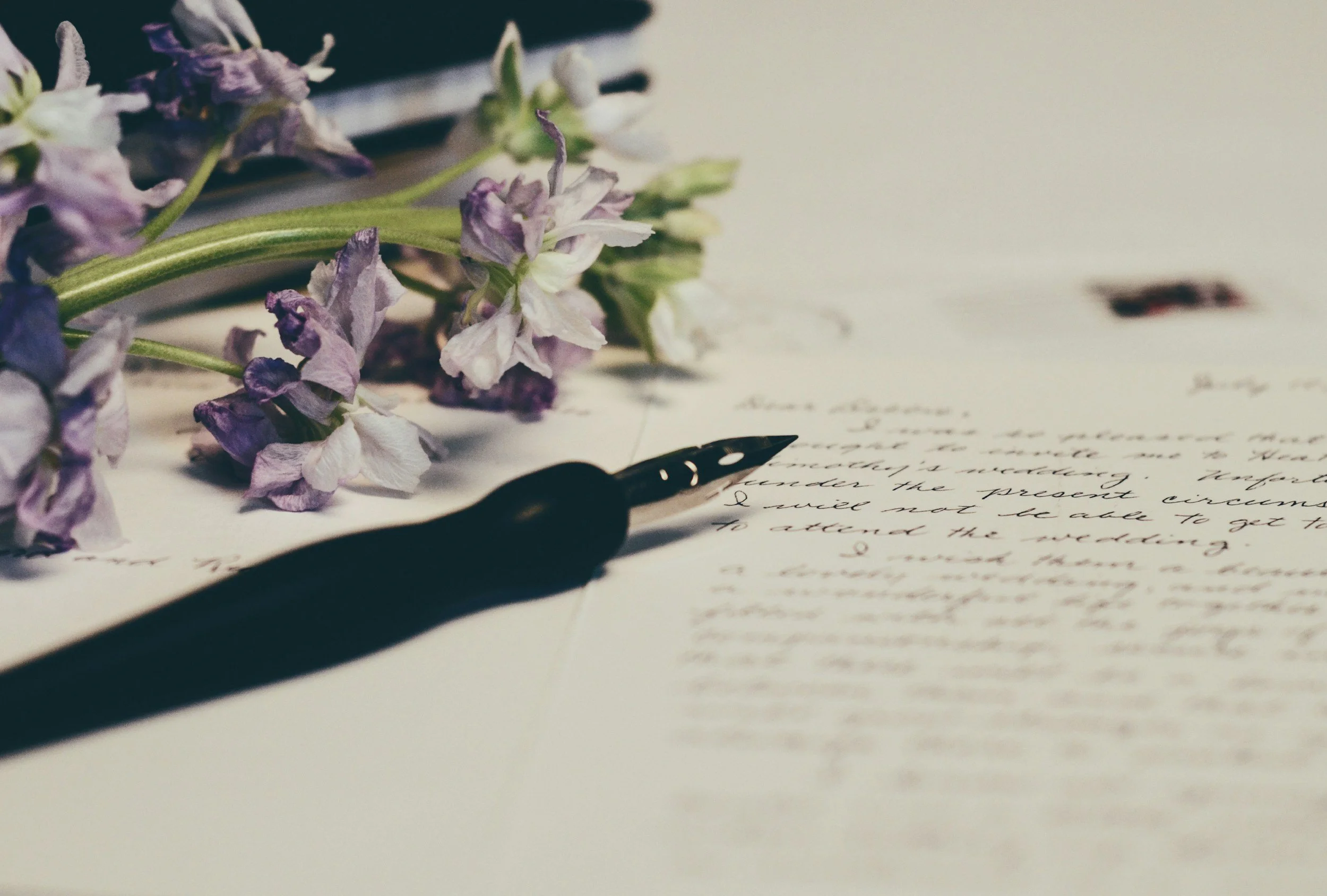
Have you ever loved someone quietly from a distance, carrying feelings you could never quite bring yourself to reveal? Perhaps that love has remained with you not just for months or years, but for as long as twenty years. This poem explores the tenderness, uncertainty and enduring hope of a love that has remained unspoken for two decades.
For twenty years, my heart has known,
A quiet love that’s never shown.
The day we met, the world stood still,
A gentle spark, a silent thrill.
Each time our paths would intertwine,
The brightest moment became mine.
Your smile became my sunlit day,
"I'm glad you're here," I want to say.
But when you leave, the light departs,
A hollow echo fills my heart.
The words I long to say stay sealed,
A love so deep yet still concealed.
"So, if I asked, would you tell me true?"
Do you feel it? I cannot tell.
A secret song I guard so well.
For two decades, my soul’s refrain:
I love you still, through joy and pain.
My Soul’s Refrain
InspirationI was asked to write this poem for a dear friend who, for obvious reasons, shall remain nameless. He told me about a love he had carried quietly for twenty years — a feeling never fully spoken yet never forgotten. It became the inspiration for My Soul’s Refrain, a poem about affection held at a distance, the happiness of simply seeing someone, and all those words that remain unsaid. He has kindly given me permission to publish it. Before doing so, I asked him one question: “If she ever reads it, will she know it’s about her?” His answer was wonderfully simple. “She’ll know.”
Caught by the Tide

The waves rise high, the current strong,
I’ve battled here for far too long.
Seaford’s shore, once clear in sight,
Now fades into the creeping night.
Each kick, each stroke, a fight in vain,
The icy sea numbs me with pain.
I gasp for breath, my voice won’t sound,
As salt-filled waves pull me down.
Cold and tired, I drift, I sink,
Hope is lost; or so I think.
Then through the dark, a steady grip,
A voice, then below the waves I no longer slip.
"I've got you now; you're safe, just breathe,"
The lifeboat man won’t let me leave.
Through crashing waves, through endless deep,
He pulls me back from the channel’s keep.
Caught by the Tide is a tribute to the courageous men and women of the Royal National Lifeboat Institution. In the most dangerous conditions, RNLI volunteers put their specialist training and skills to the fore to rescue those in distress at sea. This poem honours their bravery, compassion and unwavering determination to bring people safely home.
InspirationMy inspiration for writing this poem comes from witnessing, first-hand, the dedication of the crew who train week after week, often at weekends, off the Newhaven and Seaford coastline. Their commitment, discipline, and determination to continually develop the skills needed to perform their role safely and effectively is something I greatly admire.
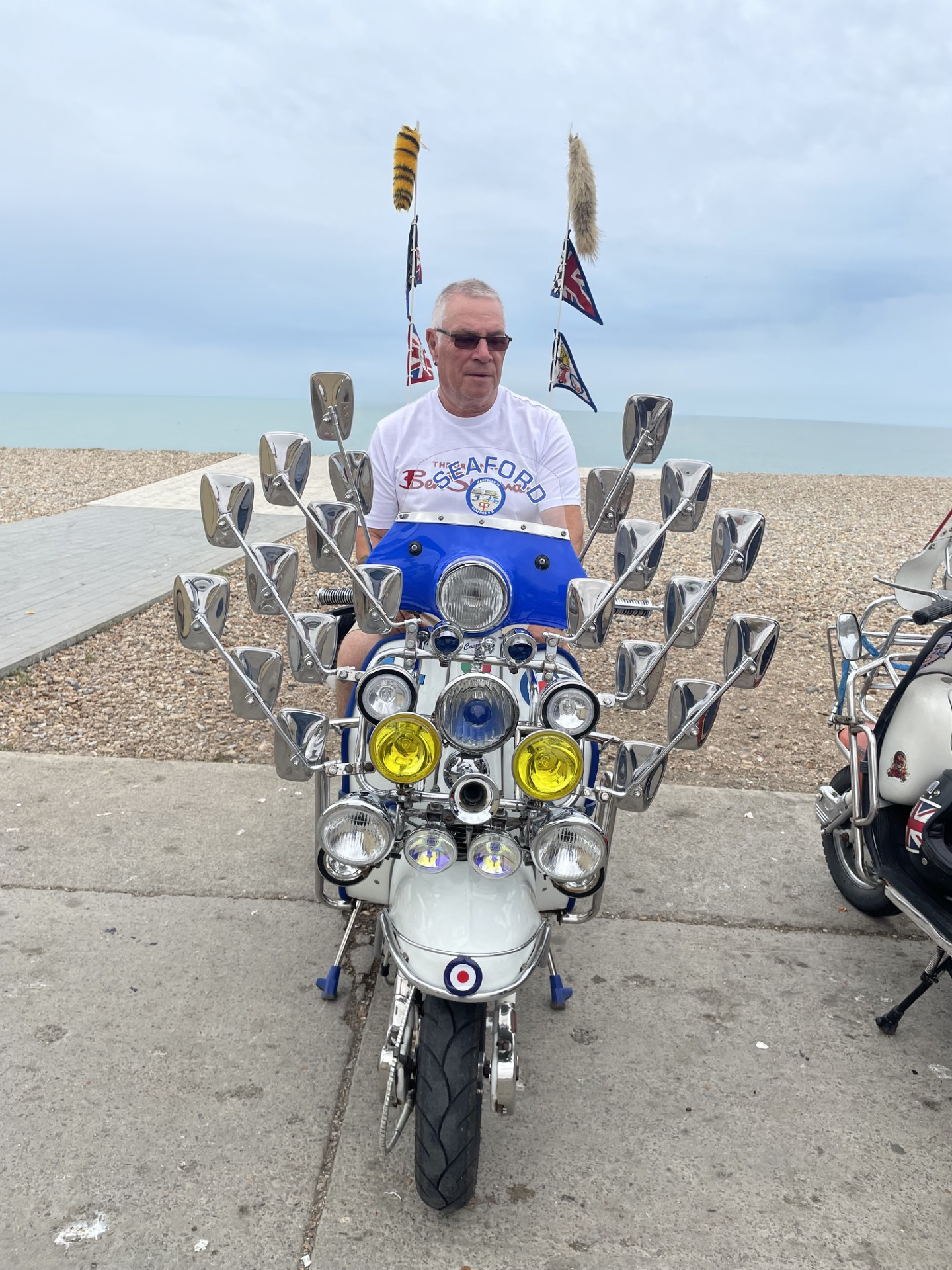
Mirrors gleaming, row on row,
Chrome and colours steal the show.
Lights ablaze in yellow hue,
White and silver, Seaford blue.
Flags are flying by the sea,
Mod perfection, proud and free.
A two-wheeled star from days gone by,
Still turning heads as it rolls by.
Mirrors, Mods and Memories
InspirationLiving so close to Brighton, the Mod culture and the scooters associated with it have always felt part of the character and history of this stretch of the Sussex coast. The make and style of bike are instantly recognisable and have become iconic images of Brighton, particularly through their association with the Mod era and the most famous film of its time, Quadrophenia.
It’s Like Christmas Day, Every Day.

For fifteen years I’ve shared the way,
And gone to work with you each day.
Through early starts and evenings late,
I’ve watched you grow and shape your fate.
It’s Christmas morning every time,
A gift that grows with passing time.
For every day brings something new,
Another thought, another view.
I’ve watched your confidence appear,
Then strengthen with each passing year.
From quiet steps when first begun,
To standing tall in all you’ve done.
You brought technology through our door,
And showed me things I’d missed before.
New ways to work, new things to try,
You saw the future drawing nigh.
And somewhere on that winding track,
You found your niche and not looked back,
You found the place where you belong,
And with each year, you’ve grown so strong.
They smile and tell me, “He’s like you,”
And yes, perhaps in things we do.
A turn of phrase, a certain way,
A stubborn thought from day to day.
But when they say you’re just like me,
There’s something more they fail to see.
For you have grown beyond my stride,
And that’s the source of all my pride.
You’ve taken what I tried to teach,
Then travelled further than my reach.
You’ve made your mark, you’ve found your voice,
You’ve built your future by your own choice.
A father hopes his son will grow,
But what that means, I cannot know.
Until one day I turn and see
The man beside me, strong and free.
Not following footsteps left behind,
But making footprints of your own kind.
And though perhaps we share a name,
You’ve built your own and lit your flame.
So fifteen years have come and gone,
Yes, still together we carry on.
And every morning through that door,
I wonder what the day has in store.
For work is more than work to me,
It’s sharing life and watching thee.
A privilege I’ll always treasure,
A father’s pride beyond all measure.
And if they say, “He’s just like you,”
I’ll smile, because I know what’s true.
Perhaps there’s something of me there,
A turn of phrase, a look we share.
But son, you’ve grown to be your own,
With strength and purpose clearly shown.
And after all these years, I'm happy to say:
With you, it’s still like Christmas, every day.
It’s Like Christmas Day, Every Day is a heartfelt reflection on the unique bond between a father and son who have worked side by side for fifteen years.
The poem follows the father’s experience of watching his son grow from someone finding his place within the family business into a confident, capable man with his own ideas, strengths and direction. It celebrates the passing on of knowledge between generations, while also recognising that a son must ultimately create his own path. At its heart, the poem is about pride. It captures the joy of seeing a son embrace new technology, bring fresh thinking into the workplace, discover his own niche and become more than simply a reflection of his father. The repeated comparison with Christmas expresses the sense of anticipation the father still feels each working day. Even after fifteen years, there is something new to discover, something to admire and something to be grateful for.
It is ultimately a celebration of family, shared purpose, personal growth and the privilege of watching someone you love become their own person.
InspirationIt’s Like Christmas Day, Every Day was inspired by the warmth, pride and excitement I feel from working alongside my son for the past fifteen years. During that time, I have watched his confidence grow, seen him bring new ideas and technology into the business, and, most importantly, watched him find his own path.
People often say he is just like me, but what makes me proudest is knowing he has become very much his own man. The poem is a celebration of that journey, and I hope it resonates with other fathers who have had the privilege of working side by side with their sons.
And to the son who inspired these words — you know who you are.